 +62 859-2375-1379
 reservations@lombok-indonesia.org



 English
 العربية
 简体中文
 繁體中文
 Dansk
 Nederlands
 Français
 Deutsch
 हिन्दी
 Indonesia
 日本語
 한국어
 Melayu
 Polski
 Slovenščina
 Español
 ไทย
 Türkçe
 Українська
 Русский
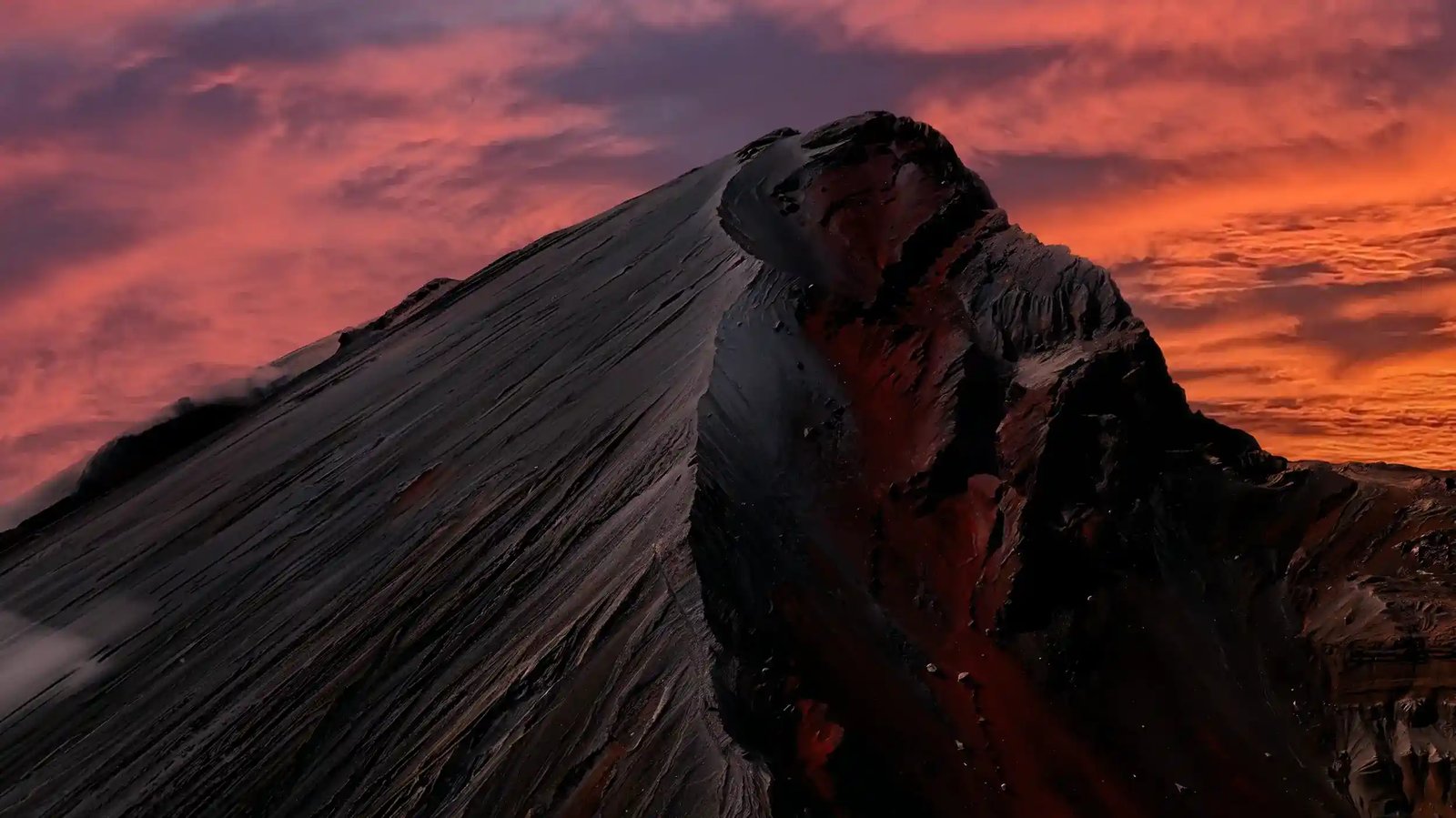
There is no official summit sunrise table for Rinjani, but regional astronomical times give you a solid planning window: around 06:20 in mid-May, around 06:25 in mid-August, and around 05:52 in mid-October, calculated for Mataram on the middle of each month in local WITA time. Those are lowland regional references, not summit-observed times, and they should never be copied onto a page promising when the sun will appear from the top.
The summit complicates the arithmetic. Rinjani stands at 3,726 meters, and horizon, cloud and altitude all shift the moment the sun first appears to someone standing on the highest point. Sunrise also drifts within each month, by several minutes between the first and last day, so a fixed departure hour cannot guarantee first light. That is one reason guides set the wake-up call from experience rather than from a calendar: the standard plan leaves Plawangan Sembalun, the rim camp at about 2,639 meters, at around 02:00 and budgets roughly 4 hours up and about 1.5 hours down.
Personal pace varies enormously, which matters more than most people expect. One documented account reports a personal ascent of 8 hours 30 minutes from the Sembalun rim to the summit, against the roughly 4 to 5 hours in a standard guide estimate. If you walk slower than average, your guide will start you earlier, and being on the summit ridge before the published time is far better than arriving as the light is already built.
For planning purposes, treat the regional times as the anchor: a mid-August dawn near 06:25 with a 02:00 start, an October dawn closer to 06:00 that moves the whole night earlier, and May sitting in between. Ask your operator for the exact wake-up time for your date and route, carry a working headtorch with spare batteries rather than a phone light, and be in position twenty to thirty minutes ahead of the published sunrise so you catch the full light buildup over the caldera.